
This is a sentiment I’ve seen put forth from skilled compatibilists:
While Molinists say agents can do otherwise in the same circumstances, no Molinist would say that it’s possible for an agent to act contrary to God’s actual foreknowledge.
Even if that were true, as the title of this latest entry suggests – I think Molinism as a philosophical system entails that it is indeed possible for an agent to act contrary to God’s actual foreknowledge. Whether any Molinist actually thinks that is not my concern, if, in fact, they should think that if they’re to be true to the philosophical implications of Molinism. However, what’s interesting is that the Molinist loses no ground on that concession with respect to God’s infallible foreknowledge, if he also maintains that: although it is possible for an agent to act contrary to God’s actual foreknowledge, an agent never would act contrary to God’s actual foreknowledge and God knows that! So, the question is, does Molinism entail that (a) it is possible for free agents to act contrary to God’s foreknowledge and (b) it is impossible that God could actually have a false believe about the future? I believe Molinism entails both a and b.
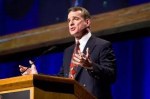
William Lane Craig at least affirms a, per 24 minute mark, which would seem to undermine the initial claim made by some skilled compatibilists:
Helm: “Why can’t they [i.e., human libertarian-free agents], as it were, go off in the other direction [i.e., than the direction God decreed]?”
Brierley [echoing Helm’s question]: “Why couldn’t they go off-script?”
Craig: “Well, they could! That’s the whole idea!”
However, my concern, as already stated, isn’t whether any Molinist affirms a and b, but whether Molinism entails both a and b. (My suspicion is Craig also affirms b, given that his views seem indistinguishable from the implications of the position he champions.)
Points to consider:
1. Theological determinists believe that it is possible under identical circumstances that I not to write this post. That’s because it is not necessary or impossible that I would or would not write this post, which implies what I would do is a contingent truth (neither necessary nor impossible).
Once we introduce divine foreknowledge into the mix, it is no longer possible from a Reformed perspective for me to have done otherwise. That’s because from a theological determinist perspective, foreknowledge presupposes a determined free choice that can no longer be otherwise. More pointedly, once we move to the actual decreed world, we are no longer talking about mere abstract possibilities of what could occur (within God’s power) but rather which possibilities God has actually determined would be true.* In other words, from a Reformed perspective God’s foreknowledge of contingent counterfactuals of creaturely freedom (CCFs) presupposes them being causally ensured by a decree that entails their determined truth values. But that’s not how Molinists see things, of course.
2. What is possible for an agent to freely choose is always correlative to what the agent could freely choose, even after the decree and foreknowledge. That seems evident for either system.
3. However, from a Reformed perspective what one could freely choose becomes limited by the creative decree. Consequently, given an exhaustive decree, the previous possibilities prior to the decree are in the actual world reduced to one. The determined one!
This does not make the choice itself a necessary truth. No, the would counterfactual remains a contingent truth (i.e., not necessary or impossible).
An example might be useful here:
Necessarily, if person S finds in himself in circumstance C, then S will choose X.
That relationship does not imply that S in C chooses X necessarily. Notwithstanding, S’ choice of X is a necessary condition for S finding himself in C. In other words, the truth of the consequent (S’ choice of X) is guaranteed by the antecedent (S finds himself in C). The implicational relationship in view is not causal but a matter of states of affairs. However, even with a divinely determinatively causal relationship in view, the relationship of antecedent to consequent is still not intrinsically or absolutely necessary. What has occurred by decree is that a possible truth has become an actual (contingent) truth.
4. Although from a Molinist perspective foreknowledge presupposes decree (just like it does with theological determinism), the decree does not limit possibilities like it does with theological determinism; that’s because within Molinism the decree does not include free choices that are determined to be causally secure. Hence, the contingency of any free choice carries through to the actual world God has decreed, as there remains the possibility of freely choosing otherwise within Molinism (even after the decree and consequent foreknowledge). In short, from a Molinist perspective God’s foreknowledge exerts (or implies) no causal influence upon free choices.
5. Yet from a Reformed perspective, the contingency does not carry through in the same sense as it does with Molinism. That’s because from a consistently Reformed perspective all contingencies are possibilities that God can determine to be actual, which are not dependent upon man’s libertarian freedom. Consequently, given a Reformed view of the decree, contingent truths become, according to God’s creative decree, causally necessary, having been freely determined by God. (These truths do not become necessarily true, precisely because God can determine and actualize another contingent outcome from identical states of affairs.)
6. Yet, if we could freely choose otherwise according to libertarian free will (LFW), then choosing otherwise is a possibility in any actual world. Consequently, it is possible that one freely chooses contrary to what God knows! That’s because free choices are indeterminately free within Molinism. In short, if the decree does not causally secure a free choice, it cannot restrain a contrary free choice.
7. To the surprise of many Calvinists, that concession presents little problem for the Molinist mindset. A consistent Molinist will assert that although it was possible that I not write this post when God knew I would, that does not imply that it is actually possible (i.e., actualizeable or feasible) that I would not write this post. To assert otherwise would entail an illicit transfer of the possibility in view, from man’s freedom to choose otherwise to God’s actual beliefs of free choices being wrong. (I’ve never read or heard a Molinist’s view on this specific challenge.)
The possibility of choosing contrary to how God knows I would freely choose does not imply God actually could be wrong – if the possibility of choosing otherwise is an “infeasibility” that God knows would never occur under identical relevant circumstances. In short, the possibility of choosing otherwise doesn’t trump God’s middle knowledge in Molinism.
8. For the Molinist, if we incorporate the decree into possible worlds, which is not a common exercise(!), then there are only impossible worlds in which God is wrong. That’s because possible worlds are complete and consistent states of affairs relating to how the world could have been, and it is logically inconsistent that an infallible God would be fallible. (Such a world would be as impossible as a world containing a square circle.)
However, this invites the thorny question, how in this decreed world is it meaningfully possible for man to choose other than what God has decreed, if it’s impossible for God (within this possible world) to be wrong about his decree?
9. The possibility of man freely choosing otherwise is not inconsistent with man. Whereas the possibility of God being wrong is inconsistent with God. That (a) man could choose otherwise does not imply the falsity of (b) God could not actually be wrong, if it is true that (c) man would not choose otherwise. The second premise (b) pertains to the outcome of (a), which takes into account God’s belief about (c). In other words, (a) is according to God’s pre-volitional natural knowledge of possibilities, whereas (c) pertains to God’s middle knowledge of feasibilities. Consequently, (b) is guaranteed by God’s middle knowledge of (c), and is unaffected by (a). But again, how in this decreed world is it meaningfully possible for man to choose other than what God knows, if it’s impossible for God to be wrong about his decree?
10. From a consistent Molinist perspective, it is because of infallible middle knowledge that God would never believe falsely about what I would freely choose, even if it were true that I could (possibly) choose otherwise.
The impossibility of God actually being wrong is attributable to his infallible middle knowledge of what one would freely choose as opposed to his natural knowledge of what one could (possibly) freely choose. Consequently, there is no obvious surface mismatch of God’s beliefs about possible indeterminately free choices that might occur, if certain possibilities are infeasibilities that God knows would not occur. Of course, from a Reformed perspective that’s a big if, and must be addressed in a precise philosophical manner that comports with an orthodox doctrine of God and the nature of undetermined yet eternally true-counterfactuals of creaturely freedom.
In short, it’s not a question of whether the God of Molinism could be wrong about the decree but rather, can God know any indeterminately free choice! (Reformed thought along with Open Theism answer no to that question.) In other words, from a Reformed perspective the LFW thesis does not lead to fallible divine foreknowledge but to limited divine foreknowledge.
* “More pointedly, once we move to the actual decreed world, we are no longer talking about mere abstract possibilities of what could occur (within God’s power) but rather which possibilities God has actually determined will occur.”

That’s a slight simplification because the decree determines not only what will occur but also all true-counterfactuals of creaturely freedom (or hypotheticals couched in the subjunctive mood, which includes things that would occur if certain antecedent states of affairs were to obtain.)


4 responses to “Within Molinism, The Possibility of Choosing Contrary to God’s Foreknowledge Does Not Imply The Possibility of God *Actually* Being Wrong About The Future”
[…] Read More […]
LikeLike
[…] Only incompatibilism posits room for the possibility of saving faith for the non-elect. However, the libertarian freedom of incompatibilism cuts two ways. If it is truly possible that a non-elect adult freely believes the gospel, then it is equally possible that an elect adult will always freely reject the gospel. Consequently, it cannot logically be maintained that Christ’s death is effectual for the elect given the possibility of an elect person not believing. What’s critical to grasp is that the same incompatibilist freedom that allows for the possibility of all people to believe does not make room for causal divine influence (i.e., effectual grace) upon the free choices of anyone, including the elect. Or as Davenant would have it, the decree of predestination “is in no wise hindering or confining this power either on the part of God, or on the part of men.” […]
LikeLike
[…] Only incompatibilism makes room for the possibility of saving faith for the non-elect. Or as Davenant would have it, the decree of predestination “is in no wise hindering or confining this power either on the part of God, or on the part of men.” […]
LikeLike
[…] Not so. The possibility of choosing contrary to God’s knowledge does not logically imply the possibility of God being wrong. Since counterfactuals of creaturely freedom are contingent truths, they’re neither necessary nor impossible occurrences. They exist as possibilities in all possible worlds. But God being wrong entails an impossible world. Consequently, to expose such a mismatch is a tall order. […]
LikeLike