
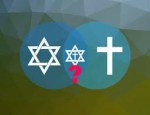
I’m afraid for a particular presbytery of the PCA.
In the relatively recent past the Philadelphia presbytery of the PCA admitted a Teaching Elder who held to the continuation and practice of the charismatic gifts of prophecy* and tongues, which is strange doctrine that is either hostile to the Westminster standards or strikes at the vitals of the Reformed faith. (BCO 21-4.f.) After this fundamental doctrinal departure from the Westminster standards was overwhelmingly confirmed as such by the PCA’s highest court – the standing judicial committee (SJC) – with 22 concurring, 0 dissenting, and 2 absent, the congregation left the denomination.**
Unfortunately, the Philadelphia presbytery seems to have learned little from the exercise and has remained doctrinally misguided and, frankly, compromised as it turns a blind eye to a “messianic” congregation in the presbytery that worships on Saturday rather than Sunday, again contrary to the plain teaching of the Westminster standards and vows taken by the presbyters. (WCF 21.7) Sadly, many are not moved by what should be considered in more sober moments as theologically abhorrent. Consequently, it’s safe to say that many have become lukewarm and indifferent to doctrinal fidelity.
From the church’s website:
We believe that Jewish believers in Messiah have every right to maintain their Jewish identity and to worship in a Jewish way.
If Jewish has religious connotation, then may Roman Catholics maintain their Roman Catholic identity and worship in a Roman Catholic way? Yet if the label has cultural or ethnic connotations, then what are these Jewish customs and values, and how might they be implemented as distinctly Reformed elements of congregational worship? (I’ll table thoughts about whether certain messianic practices and observances are inherently sectarian, unwelcoming, seemingly prideful and unnecessarily divisive to those who have intentionally strived to assimilate into Christian community.)
We believe that there is no contradiction between Messianic faith, Reformed theology, or Jewish heritage. The Messiah of Israel is also the Savior of the World.
Obviously the Messianic faith does not identify as Reformed theology otherwise the statement is nonsensical. So, what are these Jewish distinctives that are implicitly lacking or not swallowed up by the Reformed tradition? The obvious answer pertains at least to special and undo attention given to Jewish sacred days and seasons from the Torah such as Passover – Feast of Unleavened Bread, Sukkot – Feast of Tabernacles, along with attention to rabbinical observances including Rosh Hashanah, Yom Kipper, Hanukkah – Festival of Light etc. Does religious emphasis upon such holy days have a place in the New Testament church?***
But now after you have known God, or rather are known by God, how is it that you turn again to the weak and beggarly elements, to which you desire again to be in bondage? You observe days and months and seasons and years. I am afraid for you, lest I have labored for you in vain.
Galatians 4:9-11
Much can be said regarding, for instance, participating in Passover Seders, as it relates to (a) Christian liberty of conscience and prudence, (b) Old Testament shadows and New Testament reality, (c) redemptive-historical promise and fulfillment, and (d) soteriological obfuscation and illumination. However, it’s not my intention to provide a thorough examination of the subject other than to notice that “weak and beggarly elements” have crept into a congregation of a presbytery and by extension into the PCA.
In short, historical remembrances that preserve Jewish identity casts an Old Testament shadow over the simplicity of the gospel and the unity of the Spirit and bond of peace that finds its sacramental expression in Christian baptism and the Lord’s table alone.
There is neither Jew nor Greek, there is neither slave nor free, there is neither male nor female; for you are all one in Christ Jesus.
Galatians 3:28
There is one body and one Spirit, just as you also were called in one hope of your calling; one Lord, one faith, one baptism, one God and Father of all who is over all and through all and in all.
Ephesians 4:4-6
The cup of blessing which we bless, is it not the communion of the blood of Christ? The bread which we break, is it not the communion of the body of Christ? For we, though many, are one bread and one body; for we all partake of that one bread.
1 Corinthians 10:16-17
Aside from reverting back to weak and worthless elementary principles (ESV translation of Galatians 4:9), I’d prefer to camp out on the clear teaching of the Westminster Larger Catechism (WLC) on Sunday observance replacing Israel’s sabbath to the end of the world.
The Fourth Commandment requires of all men the sanctifying or keeping holy to God such set times as he has appointed in his Word, expressly one whole day in seven; which was the seventh from the beginning of the world to the resurrection of Christ, and the first day of the week ever since, and so to continue to the end of the world; which is the Christian sabbath, and in the New Testament called the Lord’s day. The sabbath or Lord’s day is to be sanctified by an holy resting all the day, not only from such works as are at all times sinful, but even from such worldly employments and recreations as are on other days lawful, and making it our delight to spend the whole time (except so much of it as is to betaken up in works of necessity and mercy) in the public and private exercises of God’s worship; and, to that end, we are to prepare our hearts, and with such foresight, diligence, and moderation, to dispose and seasonably dispatch our worldly business, that we may be the more free and fit for the duties of that day.
WLC 116-117
Consequently, even aside from other Jewish emphases, a Reformed church may not forsake Lord’s Day worship. It’s that simple. It won’t do to legalistically try to loophole this matter by saying that the biblical first day of the week begins on Saturday. Let’s not complicate matters. Obviously there is something distinctly Jewish going on otherwise we should expect a proportional number of non-messianic congregations to worship on Saturday too, but we don’t and for good reasons that pertain to the finished work of Christ and the new creation.****
On the first day of the week, when we were gathered together to break bread, Paul began talking to them, intending to leave the next day, and he prolonged his message until midnight.
Acts 20:7
In closing it’s fair to ask, will the Philadelphia presbytery turn from its significant departures from the Westminster standards? Or is this how the PCA’s “good faith subscription” is to be used to reach particular people groups? I ask these rhetorical questions with painful recognition that (a) speaking in tongues, (b) receiving direct revelation from God, (c) ignoring the Christian sabbath and even (d) the Philadelphia presbytery’s recent attempt to redefine adultery (just to name a few anomalies) are not topics that many elders want to address today. It’s unpleasant even to cite such things let alone confront them. Although I get that, it still invites sobering questions. If these matters aren’t worthy to be addressed now, then when and by whom?
I believe it’s time to face the unvarnished truth. The biggest threat to the church at large and the PCA in particular has never been unbelief and rank compromise but confessional defection with good intention. It’s primarily the un-confessional yet well intended shepherds from within who are uniquely positioned to lead Christ’s sheep astray and infect the whole lump of a Reformed denomination. With the intention of loving Jesus (or in this case Yeshua), elders can be tempted to unshackle themselves from the restraints of confessional Presbyterianism for a perceived greater good. This is pragmatism at its worst, for it is never right to do wrong in order to do right. Of course, opposing the Confession and denying one’s ordination vows wouldn’t be nearly as hazardous if it wasn’t done by those who remain within, which always results in diluting the integrity of an otherwise confessional denomination. What use is a confession of faith that isn’t upheld? What becomes of the church’s theology, piety and practice?*****
Thankfully, God continues to work out his purposes even in the midst of theological syncretism. Accordingly, might we all be encouraged to pray for NAPARC churches and presbyteries, to the end that our Reformed denominations will recommit to their solemn vows and turn from good yet misguided intentions that result in confessional infidelity. What a day of rejoicing that will be for all who love the Christ, the only Savior of the world!
*Aside from undermine a closed canon, continued prophecy more subtly undermines Christian liberty of conscience.

Scripture doesn’t bind one’s conscience about many things, such as circumstances of worship and specifics about who one should marry. These sorts of things are matters of conscience. Accordingly, any revelation the TE might think he receives about such matters of Christian liberty cannot contradict Scripture’s commands by the nature of the case. That’s the soft pentecostal’s loophole, but it falls flat because private revelation, if it’s revelation from God, is binding by virtue of it being revelation.

That’s the problem with soft-Pentecostalism. Although their proponents insist that their private revelations cannot contradict Scripture - being a supposed complement of Scripture (i.e., revelation that fills in the gaps), the alleged revelation is to be no less from God, and, therefore, it’s binding by definition. Such revelation wouldn’t contradict Scripture’s commands per se, yet it it must bind consciences in some sense if it’s truly revelation from God. Consequently, it contradicts the Reformed tenet that only Scripture may bind consciences!

**Out of the five complainants (including myself) two are affiliated with the messianic movement and two others (including myself) currently are active or are a member of the Orthodox Presbyterian Church.

***What’s interesting but beyond the current scope is the Jewishness of many messianic Jews reflects a non-Mosaic religion / rabbinic Judaism that is not biblically-historical. HT Reed Depace

****HT Robert Letham

*****From R.S. Clark:

Theology, piety, and practice— regular Heidelblog readers and Heidelcast listeners will be familiar with that formula. In classic and confessional Reformed Christianity these three things have always been understood to be intimately, organically related to each other. Our piety flows from our theology and our practice flows from our theology and our piety and they, in turn, shape our theology. The medieval theologians expressed this connection with a slogan: “the law of prayer is the law of believing” (lex orandi, lex credendi). The modern American evangelical traditions, however, as products of the Pietist movement, have tended to separate the three. Doctrine is regarded as pure theory and often immaterial to true Christianity. Practice is more determined by pragmatic considerations than by doctrine. Piety is the chief thing. So, in the Modern and Late Modern periods, Reformed piety has often been colored by Pietism and pragmatism. Our approach to personal piety, family piety, and corporate piety has been neglected or is misunderstood. Part of recovering the Reformed confession, however, is to recover Reformed piety.

 Philosophical Theology
You must be logged in to post a comment.