
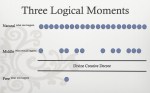
If the Reformed faith is God’s deposit of the purest doctrine in the 21st century, then being walled in by Reformed confessional theology can keep one believing true doctrine. Thankfully and in God’s kind providence, we have Reformed confessions and catechisms to guide us theologically and provide protection against believing false doctrine. However, merely believing true doctrine and actually knowing true doctrine entails vastly different propositional attitudes. It’s not hard to appreciate that believing in the Reformed doctrines of grace because the Westminster standards teach them is not on par with knowing the doctrines of grace because we’ve seen them for ourselves in the Scriptures. It’s hardly controversial that if our belief in any theological doctrine reduces merely to subscribing to it without sufficient reason, our doctrinal conviction will be either (a) as weak as our understanding of it, or else (b) factitiously inflated. Either way – whether we have no clear conviction or spurious conviction – we cannot but lack cognizant doctrinal assurance.
Even though we may have come to the Reformed faith having seen for ourselves predestination in the Scriptures, we should guard against growing comfortable with a Reformed adaptation of the Roman Catholic notion of implicit faith (fides implicita) with respect to the rest of our confessional theology. However, not only should we not be theologically credulous – neither should we be skeptical when we approach the church’s teachings. Rather, we should recognize that although post-apostolic teachings may err and have erred, Christ’s promise to build his church upon the teachings of Scripture presupposes that by attending to the church’s teaching we can lay hold of true doctrine and the substance of genuine Christian piety and practice. Accordingly, through prayerful study and the church’s teaching, we may be confident that we can arrive at the church’s doctrine set forth in Scripture as we attend to the Scripture’s teaching that is embedded in the catholic creeds and Reformed confessions.
God’s Foreknowledge
Although the Reformed doctrine of divine foreknowledge is not attended to with the scholastic care it once was, there are nonetheless contemporary doctors in the church who ably defend the doctrine against aberrant views that can appear quite enticing. (See James Anderson and Greg Welty.) Notwithstanding, because Reformed institutions today have in large part not seen the need to bring the Reformed tradition into dialogue with contemporary analytic philosophy, those teachers are relatively few. As a result, capable Reformed students can be left with a superficial philosophical-theology if not an incorrect understanding of how to defend against the sophistication and growing influence of modern day Molinism.
What’s at stake?
Before getting into terms of art and an interaction with the contemporary Reformed landscape, it should be appreciated at the outset that the Reformed doctrine of God’s creative decree as it relates to divine foreknowledge and free will are the most distinguishing features of the Reformed faith when compared to all other evangelical traditions. Furthermore, given the interdependence between theological concepts, in particular the doctrines of God and his works, a fragile grasp of either will necessarily lead to a lack of clarity about the other (if we are consistent).
Finally, the name most associated with Molinism today is William Lane Craig. In Craig’s estimation:
[Molinism is] one of the most fruitful theological ideas ever conceived. For it would serve to explain not only God’s knowledge of the future, but divine providence and predestination as well…
Although I differ with Dr. Craig’s viewpoint, on some level I do appreciate his enthusiasm. Any Calvinist who is thoroughly acquainted with Molinism recognizes that it provides a robust view of divine sovereignty while offering a view of free will that is attractive to most. Notwithstanding, it is my conviction that only the theological determinism of the Reformed tradition can reconcile God’s exhaustive omniscience and human freedom. In particular, a deeper appreciation for God’s free knowledge can lead to radically profound reflections over the sovereign determination of contingent truths pertaining to creation, providence and grace, while simultaneously rendering the supposed profundity of Molinism utterly fruitless.
Taxonomy
Before interacting with the thoughts of Paul Helm, who has been considered by many to be the go-to Reformed philosophical expert in the doctrines of decree and providence, it might be helpful to consider some terms and concepts when it comes to God’s exhaustive omniscience. Without being familiar with specific terms of art, it will be difficult to understand Helm’s missteps and just how generally disunited the Reformed camp is in trading in settled philosophical jargon, which in turn makes dialogue with skilled, yet opposing, Christian philosophers like J.P Moreland and William Lane Craig more challenging than necessary.
Natural Knowledge, a very good place to start:
Natural knowledge is God’s knowledge of all necessary truths. What this means is that God’s natural knowledge includes those things that are impossible not to be true, such as the law of non-contradiction (LNC) and God’s attributes. For example, there is no possibility that an object while being a rock is not a rock (LNC), or that God can be other than holy (divine attribute). We might observe up front that objects of natural knowledge are true without God willing them to be so. Rather, objects of natural knowledge are true because they are grounded in God’s unwilled nature. In addition to these sorts of necessary truths, God also knows all possibilities according to his natural knowledge. From a distinctly Reformed perspective, God’s natural knowledge of all possibilities correlates to God’s self-knowledge of what he can do. Which is to say, God can actualize all possibilities, which is not a tenet of Molinism.
Free Knowledge
In addition to God’s natural knowledge, God has free knowledge. Unlike natural knowledge, free knowledge is logically predicated upon God’s creative decree. A comparative example might be useful here. God knew that Tyre and Sidon would not repent because he freely willed that they would not repent. Consequently, God’s knowledge regarding Tyre and Sidon, from a distinctly Reformed perspective, was predicated upon his sovereign determination, which is unlike God’s passive knowledge of his holiness. What is perhaps less obvious in this regard is that God did not only determine the hardness of heart found in Tyre and Sidon, but also the counterfactual truth that had certain miracles been done in Tyre and Sidon, they would have repented.* So, although the counterfactual of Tyre and Sidon’s repentance was not decreed actually to occur in history, it was no less determined that: had certain miracles been done in Tyre and Sidon, they would have repented. We may refer to both types of counterfactuals of creaturely freedom as would-counterfactuals. The takeaway is simply this. From a Reformed perspective, objects of free knowledge don’t just include determined things that will occur but, also, those determined things that would occur if certain states of affairs were to obtain (even if they won’t). Consequently, although all would-counterfactuals are objects of God’s omniscience (specifically, God’s free knowledge), not all are foreknown as future. In other words, some counterfactuals are determined merely to be true, whereas others are determined actually to occur. An additional example might be useful in making the point. God decreed that I’d write this piece at precisely this time under certain conditions. However, if God also knows what I would have done had I been distracted by a phone call while writing, then that bit of additional knowledge would be according to his free knowledge of an independently determined counterfactual. In other words, God would not know what I would have done under other circumstances according to natural knowledge but via his free knowledge.
Consistent Reformed thinkers, a summary of sorts:
An entailment of Reformed thought is that the free choices men would make in any situation are divinely determined and, consequently, a result of God’s creative decree. With this understanding comes a recognition that would-counterfactuals, which God freely knows, are in a qualified sense a subset of counterfactual possibilities that God knows according to his natural knowledge. This means that from a Reformed perspective, would-counterfactuals are contingent truths which God freely determines, whereas the set of possibilities from which God chooses to make them true are necessary truths grounded in God’s self-knowledge of what he can actualize.** As 19th century Princeton theologian A.A. Hodge would correctly have it – God determines the relationship of cause to effect. In other words, for Hodge it is the decree of God that makes even contingent events contingent!
The decree, instead of altering, determines the nature of events, and their mutual relations. It makes free actions free in relation to their agents, and contingent events contingent in relation to their conditions.
In other words, God pre-interprets the particulars and wills their relationship of cause and effect. Consequently, true counterfactuals of creaturely freedom are objects of God’s creative decree and consequently posterior to it.
Agreement and disagreement between opposing camps:
Molinists and Reformed thinkers agree that God knows all possible counterfactuals of creaturely freedom according to his natural knowledge. In this regard, the significant difference between the two schools of thought is that from a Molinist perspective God’s natural knowledge does not inform him of which possibilities can be made actual. In other words, from a distinctly Molinist perspective God must look to his middle knowledge because not all possibilities can be actualized due to a different understanding of how God’s determination would relate to human freedom and moral accountability. In other words, because Molinism opts for libertarian freedom rather than a Reformed view of compatibilist freedom, there are infinite possibilities that God cannot make actual because they are out of his control. Molinists call such possibilities “infeasibilities”, yet they’re still philosophically (metaphysically) possible. (As stated at the outset, this is contrary to the Reformed distinction that “God can actualize all possibilities.”)
Middle Knowledge
Middle knowledge has been defined as:
God’s knowledge of true counterfactuals about what creatures would freely do under any circumstances logically prior to his creative decree.
It is not uncommon for Reformed people to approve of middle knowledge. R.L. Dabney is a fine example:
As I showed you, when explaining this scientia media, in the hands of him who holds the contingency of the will, it is illogical; in the hand of the Calvinist, it becomes consistent.
Is this true? Does Calvinism make room for middle knowledge? Chad Van Dixhoorn thinks so:
However, God does not only know all that has happened, and will happen. He also knows all that could happen (what used to be called “middle knowledge”… there is no scenario which God does not already know (1 Samuel 23:11,12; see also Matt. 11:21-23)
Philosophical Calvinists and Molinists alike understand that what “could happen” is an object of God’s natural knowledge of possibilities, not middle knowledge. (For a critical analysis of the subject as it relates to the Westminster Confession of Faith, see: Of God’s Eternal Decree In Light Of Four Commentaries on WCF 3.2. Have we drifted?) But not to lose sight of the present concern, we must maintain for now that middle knowledge is not something the Reformed may subscribe to.
R. Scott Clark has this to say, contrary to Dabney, Van Dixhoorn and many other Calvinists:
So far as I know, the Calvinists of the 17th century, who faced the doctrine of MK directly, rejected it thoroughly.
I’ll stay in my non-historian lane and simply say that any Calvinist of the 17th century who did not oppose middle knowledge upon full acquaintance should have!
Yet even Paul Helm had for a season missed this fundamental point.
It ought to be stressed that all this is common ground both to Molina and to his opponents; each side allows for the idea of middle knowledge.
Recall, middle knowledge is “God’s knowledge of true counterfactuals about what creatures would freely do under any circumstances logically prior to his creative decree.” Now, of course, Reformed thinkers affirm that God has “knowledge of true counterfactuals about what creatures would freely do under any circumstances.” The problem Reformed thinkers have with middle knowledge is not that God has knowledge of true counterfactuals of creaturely freedom, but that this knowledge is possessed (logically) “prior to the creative decree”! This is no pedantic matter. To gloss over logical moments is to miss the discussion! There are theological reasons why Molinism requires middle knowledge. Molinism seeks to preserve God’s exhaustive omniscience while denying the Reformed tenet that God must first determine the free choices of men in order that they might be foreknown. Consequently, if God is going to have knowledge of counterfactuals of creaturely freedom without having first determined them in a Reformed sense, then God must possess knowledge of libertarian free choices prior to the creative decree if he hopes to actualize a world that cannot possibly take him by surprise! (Libertarian Freedom without Middle Knowledge = Open Theism.)
Helm on natural knowledge:
There are, to begin with, necessary truths; for instance, the laws of logic and arithmetic. Such truths could not be false. Their truth does not depend upon God willing them to be true; he knows them to be true because he is omniscient.
To say that God knows necessary truths because he is omniscient no less begs the question than Molinism’s claim that God knows libertarian free choices because he has middle knowledge. It’s to say that God knows some objects of knowledge (necessary truths) because he knows all objects of knowledge (omniscience). Whether we want to examine Molinism or Theological Determinism, it would be interesting to know where objects of knowledge are grounded. (However, there are more significant concerns below, though that one has permeating implications.)
Helm on Free Knowledge:
Then there are the myriad truths which are true as a result of God’s will. For example, London is the capital of England, and the battle of Hastings was fought in 1066. These, and all such truths, are true in virtue of the fact that God has willed them to be true. Had not God freely willed them, then they would not be true. For this reason his knowledge of them is sometimes said to be free knowledge. They come about as the result of God’s free decision. God does not know these truths at a time after willing them, but he knows them in willing them, rather in the way in which we know many of our own actions in doing them. (Bold emphasis mine throughout the article unless otherwise noted.)
This is at best unclear to me. If, as Helm says, “each side allows for the idea of middle knowledge”, then what relevant feature distinguishes objects of middle knowledge from God’s free knowledge of London being the capital of England given that from a Reformed perspective both would be true based upon God’s decree of free choices? Leaving that aside for a moment, conventional logical order for free knowledge is: decree, then knowledge. The phrase “in willing them” eclipses an essential nuance of discrete logical order by making the doing and knowing logically simultaneous, if not also a prolonged logical moment of doing. Again, we need to be careful to maintain that God knows that London is the capital of England not in the willing of it but because he first willed it to be. (After all, Knowledge presupposes established truth. In other words, a proposition cannot be known as true unless first it is true.) There is good reason that the settled definition of free knowledge may be stated thusly: “God’s knowledge of truths known by him only logically posterior to his creative decree.” (Incidentally, that definition which pays intentional attention to logical order comes from a four-views book in which Helm later contributed.) Yet for some reason Helm is explicitly intent on communicating the opposite: “God does not know these truths at a time after willing them.” I labor the point only because without respecting the terms of art, including logical moments (not sequential “time”), the foreknowledge discussion collapses into confusion, making interaction with opposing views even more challenging. (Other examples below.)
Helm on middle knowledge:
Besides these two kinds of knowledge, there is also the knowledge that God has of all possibilities which he does not will, but which remain abstract possibilities. For example, Bognor Regis is the capital of England, and the battle of Hastings was fought in 1660. Among such possibilities are conditional propositions; for instance, if Bognor Regis had been capital of England, London would have fewer than one million inhabitants. Again, if John had married Joan they would have had three children. God’s knowledge of such possibilities has been called middle knowledge; knowledge midway between God’s knowledge of necessary truths, and God’s free knowledge.
Again, I must demur. It would seem as though Helm tries to distinguish free knowledge from middle knowledge based upon which choices men will actually make as opposed to would make if instantiated. Given that the objects of free knowledge get their truth values from God’s will, where might the objects of a Calvinistic middle knowledge get theirs? If, also, from God’s will, then what relevant distinction is being made? The bottom line is, a correct understanding of middle knowledge doesn’t allow for this distinction. Recall, Middle knowledge is “God’s knowledge of true counterfactuals about what creatures would freely do under any circumstances logically prior to his creative decree.” Accordingly, middle knowledge includes all would-counterfactuals, which includes those that will and will not occur in history.
From a Reformed perspective there are no objects of middle knowledge because all objects of knowledge are either necessary truths or divinely determined truths. In short, natural knowledge and free knowledge exhaust omniscience within Reformed thought. Even more pointedly, middle knowledge does not overlap other categories of knowledge nor is it a species of them. This non-overlap of knowledge categories is due to the libertarian freedom that middle knowledge contemplates, which in turn drives both (a) the very need for middle knowledge and (b) its logical sequential-placement (or logical moment) prior to the creative decree. In sum, the impetus for middle knowledge is the libertarian freedom that the Reformed tradition rejects, along with Helm!
More middle knowledge:
From these data there can be no doubt of the fact of God’s middle knowledge, his knowledge of possibilities which are never brought to pass. God knew what would have happened had David remained in Keilah. But David did not remain in Keilah. Christ knew what would have happened to Tyre and Sidon had his mighty works been performed there. But the works were not performed there.
For the sake of clarity, the referenced objects of knowledge aren’t mere possibilities that were never brought to pass. Rather, they are true counterfactuals of creaturely freedom that were determined to be true. From a Reformed perspective, they became objects of free knowledge only after the creative decree. (Again, logical order.)
Helm on counterfactuals:
[God] also knows propositions which could be true, but which are not in fact true, such as these concerning David and Keilah, and concerning Tyre and Sidon and Christ’s mighty works. It is from this vast array of possibilities that God in his wisdom and goodness wills the actual world, the world which you and I inhabit.
The counterfactuals in view are objects of free knowledge and, therefore, are determinatively true. They just weren’t determined to occur in history! (There are many counterfactual truths that pertain to non-instantiated freely determined acts.)
{All excerpts so far are from: Helm, P. (1993). The Providence of God. (G. Bray, Ed.) (pp. 55–68). Downers Grove, IL: InterVarsity Press.}
Fast forward Helm to 2009: Shunning Middle Knowledge
Happily, Helm no longer grants latitude for the Reformed use of middle knowledge. However, he still indexes God’s knowledge of would-counterfactuals unconventionally.
But if God knows what Jones, if placed in circumstances C, would do, then this is surely part of God’s natural knowledge, his knowledge of all necessities and possibilities.
It is a fine thing that Helm no longer makes allowances for middle knowledge. Unfortunately, by categorizing true-counterfactuals of creaturely freedom under natural knowledge, Helm makes free choices out to be necessary truths as opposed to contingent truths.
If God knows would-counterfactuals according to natural knowledge, that would make them necessary truths by definition! Moreover, even after they’re decreed to occur, they don’t become necessary truths due to their future certainty, though that is a common conceptual confusion. Holding fast to modal semantics, even when free choices are causally determined according to God’s freedom, they don’t become necessary truths that are objects of natural knowledge, thereby losing their contingency. They remain objects of free knowledge. That’s because they’re neither necessary nor impossible choices!*** But at the very least, where might such necessary free choices be grounded? In fact, what is a necessary free choice, after all?
It’s not uncommon for Calvinists, especially those steeped primarily in seventeenth and early eighteenth century scholastics, to illicitly (yet unwittingly) transfer divinely determined causal necessities, which are freely known, to objects of God’s pre-volitional knowledge of necessary truths. This conceptual confusion can lead to infelicitous wording that stems from not attending to specific modal concepts such as necessity, contingency, and possibility; so we do our best to decipher.
Whether intentional or not, such wording implies doctrine that does not comport with the philosophical compatibilism of the Reformed tradition. (Hence the call for a coherent and unified voice.) For instance, not all possible worlds could be actualized given this view (as stated), which is akin to Molinism’s limitation upon God’s absolute freedom and independence from creation. Another striking similarity to Molinism would be the elusive grounding of such counterfactuals. What is their source of truth?
It’s understandable that God knows all necessary truths including all possibilities by knowing himself, but it seems to me that this goes beyond the bounds of biblical mystery, that God would know free choices necessarily (as part of his natural knowledge) as opposed to freely. After all, does God know, not the possible atrocities of this world but the actual ones that would occur by eternal self-reflection?
Terrance Tiessen is most explicit (bold emphasis his.)
For me, God’s knowledge of counterfactuals, that is, of what free creatures would have done in hypothetical situations (and hence, in possible worlds) is extremely important to compatibilism (i.e., the compatibility of human moral responsibility with God’s comprehensive control of the world)… It is important to me to affirm that God has this knowledge naturally or necessarily, though Molinists frequently argue that I should assign it to God’s free knowledge. I posit that God knows naturally the “principles of agent causation,” like he knows mathematical truths and other abstract objects.
The Molinists are correct; Calvinists should assign such counterfactual truths to God’s free determination, making them objects of God’s free knowledge. Otherwise, God could not actualize all possible worlds, which would not even subject theological determinism to a possible-infeasible distinction similar to that which Calvinists object to about Molinism but something more extreme as discussed immediately below. Before addressing that, how are would-counterfactuals a reflection of God’s nature and similar to laws of logic and mathematical truths? Unlike God’s knowledge of possible choices and laws of logic, which are a reflection of God’s rationality, I know of no property of God that is reflected in free human choices, especially evil ones. (Tiessen has changed some of his views pertaining to middle knowledge, at least in part due to Helm’s influence, but I’m not sure whether he still holds to this view of the content of natural knowledge.)
Leibniz may have held a similar view. It’s as though our future choices were all encoded into our being but not by the will of God else they’d be objects of free knowledge! Moreover, Jones freely choosing otherwise by divine decree would not merely be a “possible-infeasibility” for Jones but an absolute impossibility because it would entail another person than Jones! (I’m grateful to Greg Welty for this insight.****)
R. Scott Clark opposes Molinism and middle knowledge:
Part of the problem concerns the definition of natural knowledge. Craig so limits the definition of natural knowledge as to exclude counterfactuals. The Reformed, however, define natural knowledge so as to eliminate the need for MK.
Molinism does not limit the definition of natural knowledge, nor does William Lane Craig. Craig grasps that natural knowledge is comprised of all necessary truths, including all possibilities. Of course, Molinism limits the actualizable objects of natural knowledge due to a prior commitment to libertarian freedom, which creates an artificial need for middle knowledge, assuming, as I do, that (a) compatibilist freedom is the only viable option that comports with moral accountability and (b) libertarian freedom is a philosophical surd. Perhaps Dr. Clark is making a similar point in shorthand, that Molinism limits actualizable possibilities. If that’s Clark’s point, then I get it and associate myself with it. But that does not constitute a foul on Craig’s part with respect to limiting a key definition of the discussion. Needless to say, Craig would easily slip the punch given the infeasible-possible distinction that Molinism thrives under, coupled with Craig’s unwavering commitment to (and proficiency with) the philosophical terms and concepts that both inform and regulate the discussion.
However, there is another way to interpret Clark. If Clark thinks that Craig limits the definition of natural knowledge by not considering true counterfactuals of creaturely freedom as objects of natural knowledge, then Clark is in agreement with Tiessen and has limited God’s ability to actualize infinite possible worlds.
Again, Clark:
The Reformed, however, define natural knowledge so as to eliminate the need for MK.
What eliminates the need for middle knowledge is not a different definition of natural knowledge but rather a Reformed understanding of what God knows according to his free knowledge, which includes determined would-counterfactuals that are part of the creative decree, not his natural knowledge.
Closing
Although more can be said, I hope the point is clear enough. Words have meaning. The Reformed tradition has correct bottom-line confessional theology, and we might even be in violent agreement over essential philosophical truths while expressing things differently! However, what the Reformed tradition seems to lack, which is not nearly as big an issue among Molinists, is a coherent academic understanding that speaks with a unified voice according to agreed upon terms regarding how divine foreknowledge relates to human freedom.***** May God be pleased to raise up at least the students of Anderson and Welty for the task ahead, as well as continue to advance their own work for the glory of His name and the good of the church.
*Molinists and philosophical Calvinists like to point to Jesus’ rebuke of the inhabitants of Chorazin and Bethsaida as proof of God’s knowledge of true counterfactuals: had Jesus performed the same miracles in Tyre and Sidon that he had performed in Chorazin and Bethsaida, Tyre and Sidon would have repented. Consequently, it has become somewhat a given, which is no problem for argument sake since there are uninstantiated counterfactuals. So, let’s use this one,if not one other (2 Samuel 23:7-13). Notwithstanding, the prima facie interpretation of the text is not that Jesus was revealing how others would have responded to those same miracles. Rather, the immediate inference is that inhabitants of Israel were even more hardened to revelatory truth than pagans (and will accordingly be counted more culpable on the day of judgment)! It might be *only* a rebuke and not a nod toward true counterfactuals, let alone Middle Knowledge. But allowing for the exegetical interpretation that demands counterfactual knowledge, turning such counterfactuals into objects of middle knowledge cannot be established given a Reformed perspective. Lastly, if the text establishes an instance of a true counterfactual, from a Reformed perspective the miracles would have triggered effectual grace causing repentance, which God would know according to his free knowledge.

** The subset in view is not a pure subset given that the set from which it derives is that of all possibilities. Whereas the subset in view is a set of all possibilities decreed to be true counterfactuals. Consequently, the original set is not a set of would-counterfactuals but a set of potential ones.

A contingent truth is neither necessary nor impossible. Being a possibility -  from a Reformed perspective it can be true by decree.

***God having freely determined a causally necessary act from a host of prior possibilities does not make the decreed relationship of cause to effect any less contingently true. Possible world semantics can be useful in cleaning up such conceptual confusion.

**** I made the infeasible-possibility observation at least back in October 2021 in an article pertaining to this matter with Helm, but not to the degree of fleshing out that it would be another person. Later, in August 2023, I posited again, as I had long before, that Molinism functionally reduces true counterfactuals of creaturely freedom to essential properties of person, which functionally translates to such counterfactuals being necessary truths. In August of 2023 the point was further developed as it relates to Molinism, that: “it is not the identical person who would ever choose according to ~x*(!)…”

Applying the argument to Molinism isn’t as straightforward because Molinism denies necessity of choice. Consequently, necessity must be developed with subsidiary arguments. Yet it’s extremely straightforward, as Welty pointed out, when would-counterfactuals are actually stated to be objects of natural knowledge!


*****Semantics or substantive disagreement?
R.C. Sproul denied determinism yet affirmed “self-determination.” Sproul also rejected spontaneity of choice, whereas Douglas Kelly has favored it. Tom Nettles favors determinism whereas Burk Parsons was relieved to learn it is not an entailment of Reformed Theology. Richard Muller has claimed that Reformed theology does not entail a form of determinism. D.A. Carson and Muller disagree on the freedom to do otherwise. John Frame, James Anderson, Greg Welty, Paul Helm and Paul Manata recognize that Reformed theology operates under a robust principle of determinism.

Either we are in need of tightening up our theology within the Reformed tradition or else we need to get a better handle on our terminology. The precision of the free will / determinism debate has advanced in the last 300 years both conceptually and in the tagging of concepts with precise terminology. The former necessitated the latter. (Taken from here.)

 Philosophical Theology
4 responses to “The Reformed Doctrine Of Divine Foreknowledge – A Call For A Coherent And Unified Voice”
[…] What this means is, God knows Peter would persevere according to his free knowledge of his decree, and he made it certain by freely determining the efficacy of Christ’s prayer for […]
LikeLike
[…] a slight simplification because the decree determines not only what will occur but also all true-counterfactuals of creaturely freedom (or hypotheticals couched in the subjunctive mood, which includes things that would occur if […]
LikeLike
[…] given the causality that the decree contemplates, contingent truths become causally necessary, though they’re not absolutely necessary. (Richard Muller appears to miss this.)**Clichés that […]
LikeLike
[…] *Paul Helm has done this by classifying God’s knowledge of counterfactuals of creaturely freedom under God’s natural knowledge. […]
LikeLike