
This quote is from Scott Christensen.
“Proponents of libertarian free will believe that for any choice to be truly free, it must not be constrained by any outside causal forces. God and other sources can influence our choices, but they cannot decisively determine the outcome of our choices. Furthermore, libertarian free will affirms that we have the power of contrary choice. Suppose you drive your car to a T-intersection and choose to turn right. However, if the clock could be rolled back and the conditions were the same, you could have equally chosen to turn left.”
When Reformed theologians defend God’s sovereignty, a semantic misstep can obscure the nuances of Christian Compatibilism.
Scott Christensen uses a T-intersection analogy to address libertarian free will. By looking more closely at his analogy, it’s not clear how we might avoid a misstep in modal logic, unwittingly turning free choices into abstract, absolute necessities.
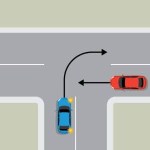
In his assessment of libertarian free will, Christensen references a free moral agent driving to a T-intersection and choosing to turn right. When comparing libertarian freedom to Compatibilism, the prima facie implication is that if the clock were turned back to the exact same conditions, a compatibilist account entails that the driver could not have chosen otherwise. (This is confidently not in dispute.) While Christensen’s intent is to push back against libertarianism and the power of contrary choice, his depiction raises a modal question for Reformed thought. Namely, are human choices necessary truths rather than contingent ones?
To suggest that a free moral agent could not have done otherwise is to miss the philosophical distinction between contingency and necessity. The counterfactual of creaturely freedom becomes a necessary truth, akin to a triangle having have three sides.*
While Reformed orthodoxy maintains that creaturely choices are casually secure, they are not necessary truths but contingent ones. Accordingly, the alternative choice (turning left) remains metaphysically possibile, which merely means there exists a possible world wherein the agent turns left under identical conditions – even if that choice is not actualized in our actual world. Therefore, the agent could turn left even if he wouldn’t. The dividing question isn’t whether the agent could turn left (he could), but whether he is able to turn left (he isn’t!).
Calvinists do well not to assign causal power to the prior conditions themselves, as though they possess an intrinsic, mechanistic force that determines human volition. Furthermore, choices should be seen neither as contingent laws of nature nor necessary laws of logic (or mathematics) but as contingent, non-law-like, divine determinations.
If the physical or historical conditions themselves carry the causal power to guarantee the outcome, the position no longer retains the contingency of Reformed Compatibilism. By collapsing possibility into necessity God is forced to work with, through and around fixed counterfactual truth. Yet from a Reformed perspectives, counterfactuals ought to be understood as products of the creative decree itself, not brute facts that impinge upon God’s decree or necessary reflections of his divine perfections. (See my interaction with Paul Helm.)
To keep Calvinism philosophically coherent, we must do justice to the philosophical distinction between the necessity of the consequence and the necessity of the consequent. It is necessarily true that if God decrees a certain turn, that turn will certainly happen (necessity of the consequence). However, this does not imply that the turn itself is an absolute necessity under identical conditions (necessity of the consequent).
From a Calvinistic perspective, it is helpful to distinguish (a) actual ability, which pertains to the actual world and God’s sovereign, determinative decree of causal relationships, from (b) metaphysical possibility, which pertains to logical consistency within any given possible world. William Lane Craig is helpful here:
“Could” is taken to express mere possibility and so is a constituent of a modal statement, expressing a possible truth. The distinction is important because the fact that something could happen under certain circumstances does not imply that it might happen under those circumstances. “Might” is more restrictive than “could” and indicates a genuine, live option under the circumstances, not a bare logical possibility.
Philosophical Foundations for a Christian Worldview (page 47)
Here are the crucial points to be mindful of from a Reformed perspective. What the agent could do pertains to possibility; whereas what the agent is able to do pertains to what God has causally ensured. Given this distinction, Reformed thought does not interpret the T-intersection illustration as an abstract logical necessity or antecedent state of affairs that limits the logical possibilities of what the agent could do, let alone what God could decree.
In short, could do should be taken as possibly could do without any reference to what has been causally secured by the decree. For instance, gravity could stop functioning tomorrow, in that it’s a logical possibility that is decreeable. However, it will not happen if God has decreed that it won’t happen. Furthermore, according to modal semantics, it is true that gravity might continue and false that it might not continue if it is true that it will continue. Applying these modal boundaries to the T-intersection scenario, the driver could turn left – though it is false that he might turn left given that he will turn right. Not to make things even more confusing, but it is nonetheless true that the driver might turn right! The point being, ability and might-counterfactuals take into account the actual world whereas as the idea of could relates merely to logical possibility across possible worlds
Putting this together
To protect God’s independence while maintaining that free choices are objects of God’s free knowledge and not divine natural knowledge, Reformed thought maintains that while an agent lacks the actual ability to thwart God’s decree, free choices are nonetheless contingently true and, therefore, could be otherwise even under identical conditions. It’s noteworthy, however, that neither the ability to do otherwise nor the possibility of doing so grounds genuine freedom for the Calvinist. Freedom is a matter of other considerations, as discussed here.
Could, would and will
Some Calvinists might initially demur because “could possibly do otherwise” can sound a bit like liberation freedom or some sort of indeterminism. This is an understandable misconception. What is unique to Libertarianism is the ability to do otherwise (assuming no Frankfurt inhibitors). In short, could tracks metaphysical possibility whereas ability pertains to this actual world. So, from a Calvinistic perspective, the claim is indeed a modest one that does not lean toward Libertarianism in the least, and it’s simply this: The agent could choose otherwise though he lacks ability to do so given the determinative nature of the divine decree. Full stop.
Conditional analysis useful but not required
Using conditional analysis, the Calvinist can affirm according to a principle of alternative possibilities (PAP) that the free moral agent could do otherwise if they wanted to do so. Whereas from an indeterminist perspective, not only could the agent do otherwise, he is also “able” to do so. Calvinism denies only the second claim.
But even apart from the conditional analysis of Classical Compatibilism that has become passé in contemporary philosophical literature, there are other reasons to accept this useful, taxonomical distinction that is consistent with the ancients and the moderns. In traditional Libertarian free will models, “ability” requires real alternative possibilities in the actual moment of choice, which cashes out as the ability to do otherwise under relevantly similar circumstances. The Reformed perspective rejects this notion of ability because for the Reformed, ability relates to what is actualized by God’s sovereign decree, so an agent is only effectually able to do what God has decreed they will do. Notwithstanding, for Reformed thinkers, possibility (“could”) merely pertains to the agent’s structural and faculty-based capacities. For instance, the driver has a working steering wheel, functioning arms, a mind and a will etc. Therefore, the driver (potentially) could have turned left (i.e., it was a structural, logical possibility), but he was not able to do so if God’s free and sovereign decree causally secured a right turn.
Summary
In the final analysis, Calvinism and Arminianism agree on the following: What could occur are objects of God’s Natural Knowledge, which includes all possibilities including contrary ones. They also agree that what will occur are objects of God’s Free Knowledge of the decree.
Where the two systems significantly part ways is on what would occur. For the Calvinist, these are determined counterfactuals, and as such are objects of God’s free knowledge of the decree; whereas for the Arminian they are stand alone truths that are undetermined objects of God’s pre-volitional Middle Knowledge.
Therefore, both sides agree that turning left is a possibility that the agent could do. Whereas what distinguishes the two systems is that Calvinism maintains that the agent is unable to act contrary to how he would. The metaphysical possibility is not realizable given the causally ordered decree.
*Similar points are made in the author’s book, What About Free Will?

The author argues that given the identical prior conditions, "only one outcome could possibly take place" (12). Consequently, while "God could ordain any variety of outcomes that obtain in the natural world and the human plane of that world," the author maintains that "if he ordained something different to occur, then the preceding conditions would be different as well" (170). This construct conflates nomological necessity with absolute necessity by collapsing contingent causal laws into God’s Natural Knowledge (his necessary knowledge of himself and all possibilities). If physical laws or human volitional responses to specific antecedents inherently necessitate their effects, they cease to be contingent. Properly categorized, these counterfactuals are indexed to God’s Free Knowledge, wherein he contingently decrees the very mapping of cause to effect. God need not alter antecedent states of affairs to ensure a different effect; God need only decree an alternative causal relation between the same conditions and a different outcome.

To salvage the author's thesis by expanding "prior conditions" to include the divine causal decree itself introduces a new problem. It departs from standard philosophical taxonomy, which distinguishes between created antecedents within any state of affairs and the transcendent divine decree of causality that governs them through ordinary providence. In philosophical debates between compatibilists and incompatibilists, "prior conditions" are strictly understood as passive, created antecedents that are the same for both philosophical systems. To violate this taxonomy is to end up with two entirely different taxonomies. In short, the taxonomy must do justice to both Compatibilism and Incompatiblism. Therefore, “prior conditions” cannot contemplate a Calvinistic use of causality.


By grounding causality in God's determinative decree, the contingency of providence is preserved while avoiding brute fact necessity; it also maintains that God is the sole eternal propositional truth-maker. Contra pages 12 and 170, alternate outcomes remain genuinely possible from identical prior conditions because the laws governing them are freely and otherwise decreable. Notwithstanding, this does not mean that a free moral agent has the ability to choose otherwise. Indeed, from a Reformed perspective he does not!


You must be logged in to post a comment.